chromnil: An affordable, all-in-one HPTLC system for effect-directed screening of food and supplements
Example result: in a food supplement, 5 of 10 separated zones show a biological effect.
Key facts
Countless applications of HPTLC and planar bioassays
- Detection of toxins or hazardous compounds
- Detection of beneficial compounds
- Water and environmental screening for contaminants and pollutants
- Authenticity test and proof of falsification
- Investigation of ingredients (e.g. UV protection, preservatives, dyes)
- Identification and detection of plant extracts or vitamins
- Quality control of products (e.g. fatty acids and lipids)
- Identify and qualify complex plant extracts
- Screening of drugs: identification of new active ingredients
- Quality control of ingredients to detect impurities
- Fast and easy on-site examinations of biological samples (e.g. drugs, blood, urine)
- Detection of counterfeit medicines
- Research into existing or new products
- Education in the areas above or the underlying separation and bioassay technology with fast visualization and results
HPTLC meets bioassay
An all-in-one instrument to qualitatively and quantitatively screen your sample for its compounds or effects. It combines five key processes from high-performance thin-layer chromatography (HPTLC) and effect-directed analysis into one system, allowing for customization and configuration to meet your specific needs.
The application step in HPTLC involves the precise and controlled deposition of sample solutions onto the 10 × 10 cm chromatographic plate. Using an automated sample applicator, samples are applied as narrow bands, areas, or spots to ensure uniform distribution and reproducibility. A proper sample application is critical for achieving sharp and well-resolved chromatographic zones, which directly influence the separation efficiency and quantification accuracy in subsequent steps. chromnil one has a rack that can store up to 9 samples with 1–2 mL each. Choose between a rack that fits reusable glass vials or one-way plastic vials.
Development is the core step in the separation of sample components. Instead of using a development chamber, chromnil continuously releases the appropriate mobile phase (solvent system) below the applied samples. As the solvent front moves upward by capillary action, the sample components partition between the stationary phase and the mobile phase based on their polarity and affinity. Optimizing development conditions, such as solvent composition, saturation, and development distance, ensures high resolution between zones and reproducibility of the separation.
Derivatization enhances the detection and visualization of analytes that may not be naturally detectable under standard detection modes. This step involves our nebulizer, which uniformly applies specific reagents onto the developed plate. Through reaction with the analytes, the reagents may produce colored or fluorescent derivatives. The choice of derivatization reagent depends on the nature of the analytes and the desired detection method, allowing for selective and sensitive detection.
Incubation is performed after the homogeneous nebulization of a biological cell suspension or substrate solution to enable effect-directed detection. In our customized incubator, the seeded HPTLC plate is exposed to controlled temperature and time conditions, depending on the selected bioassay. Zones with an effect light up; all other compounds stay dark. Proper incubation ensures a quantitative and sensitive detection of beneficial or hazardous compounds.
Detection is the final step, where the separated and derivatized components are visualized and quantified. Detection includes UVA 365 nm, UVC 265 nm, visible light, and white light back illumination. The integrated 12 MP camera enables automated, high-resolution detection for reliable identification and quantification of analytes. This step completes the analysis by providing the necessary data for interpretation and reporting.
Application
The application step in HPTLC involves the precise and controlled deposition of sample solutions onto the 10 × 10 cm chromatographic plate. Using an automated sample applicator, samples are applied as narrow bands, areas, or spots to ensure uniform distribution and reproducibility. A proper sample application is critical for achieving sharp and well-resolved chromatographic zones, which directly influence the separation efficiency and quantification accuracy in subsequent steps. chromnil one has a rack that can store up to 9 samples with 1–2 mL each. Choose between a rack that fits reusable glass vials or one-way plastic vials.
Based on 10 years of academic development
chromnil's developments are based on the 2LabsToGo-Eco system, an innovative open-source instrument that proves low-cost, high-quality analysis is possible.
As the instrument results from an academic project, you have to produce it yourself, i.e., order parts, manufacture, assemble, calibrate, repair, and update the system. This is a major burden for most laboratories or individuals who don't have the human resources, equipment, or engineering skills.
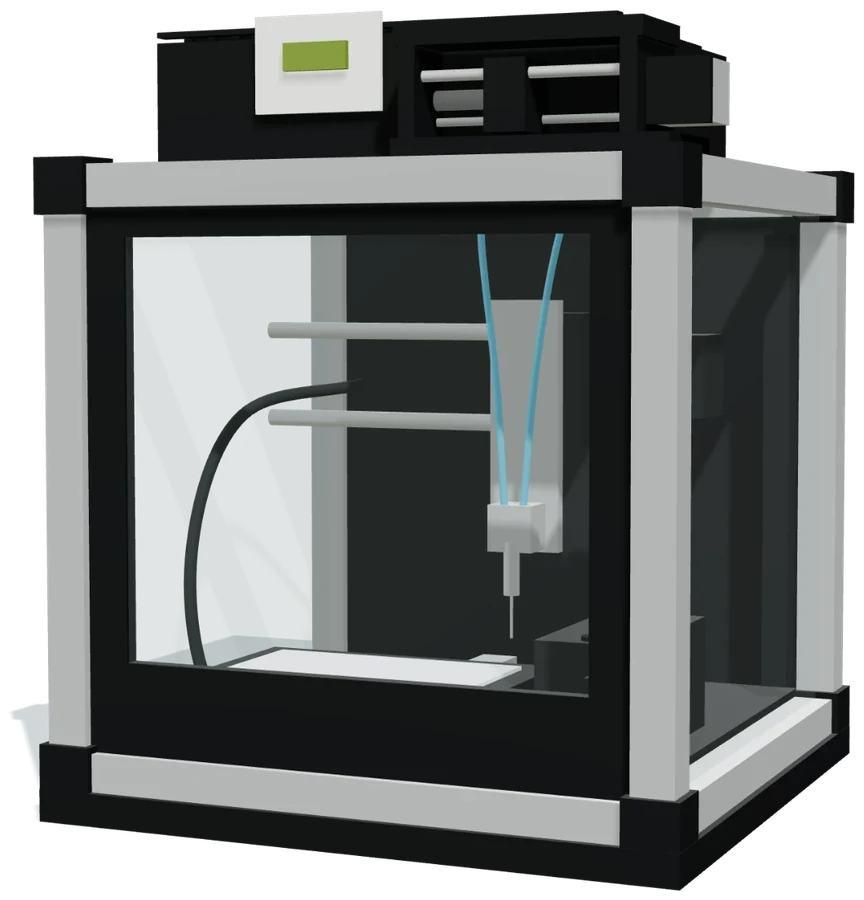
What you get with the chromnil one HPTLC instrument
The instrument
Intuitive and user-centered
The system and its software are built to minimize faulty machine operation. The intuitive and comprehensible user interface guides you through the steps and your process.
Quantitative assessment
The highly automated process and evaluation of your sample allow for quantitative, repeatable assessment.
Time-saving
Highly automated processes within one instrument minimize the user's time required during the analysis.
Sustainable
Requiring only minimal sample preparation and solution, HPTLC is a highly attractive and sustainable separation method. In addition, chromnil only requires a fraction of the material compared to state-of-the-art instruments.
The service
Ready to use
We provide the assembled system, configured to your needs
Automated updates
The software will get updated regularly to ensure optimal performance
Service
We offer fast and reliable system service if the system malfunctions or gets damaged
Support
Training and continuous support help you operate the system as efficiently as possible